So for the last few years I’ve been doing a Dungeon Crawl Classics, DCC, game in my dining room while the kids play their own game upstairs. But schedules being what they are, it has been increasingly difficult to find a time slot that worked for everyone. So playing once every six to eight weeks was common and now that their characters have gone up several levels in DCC… The amount of flipping through books to find rules or even just remember character abilities takes up a lot of our play time.
Thankfully we found time on Saturday to play. The only catch was that most of the kids couldn’t make it. So I floated the idea of trying a new system with a one-shot game and have my son and his friend join us.
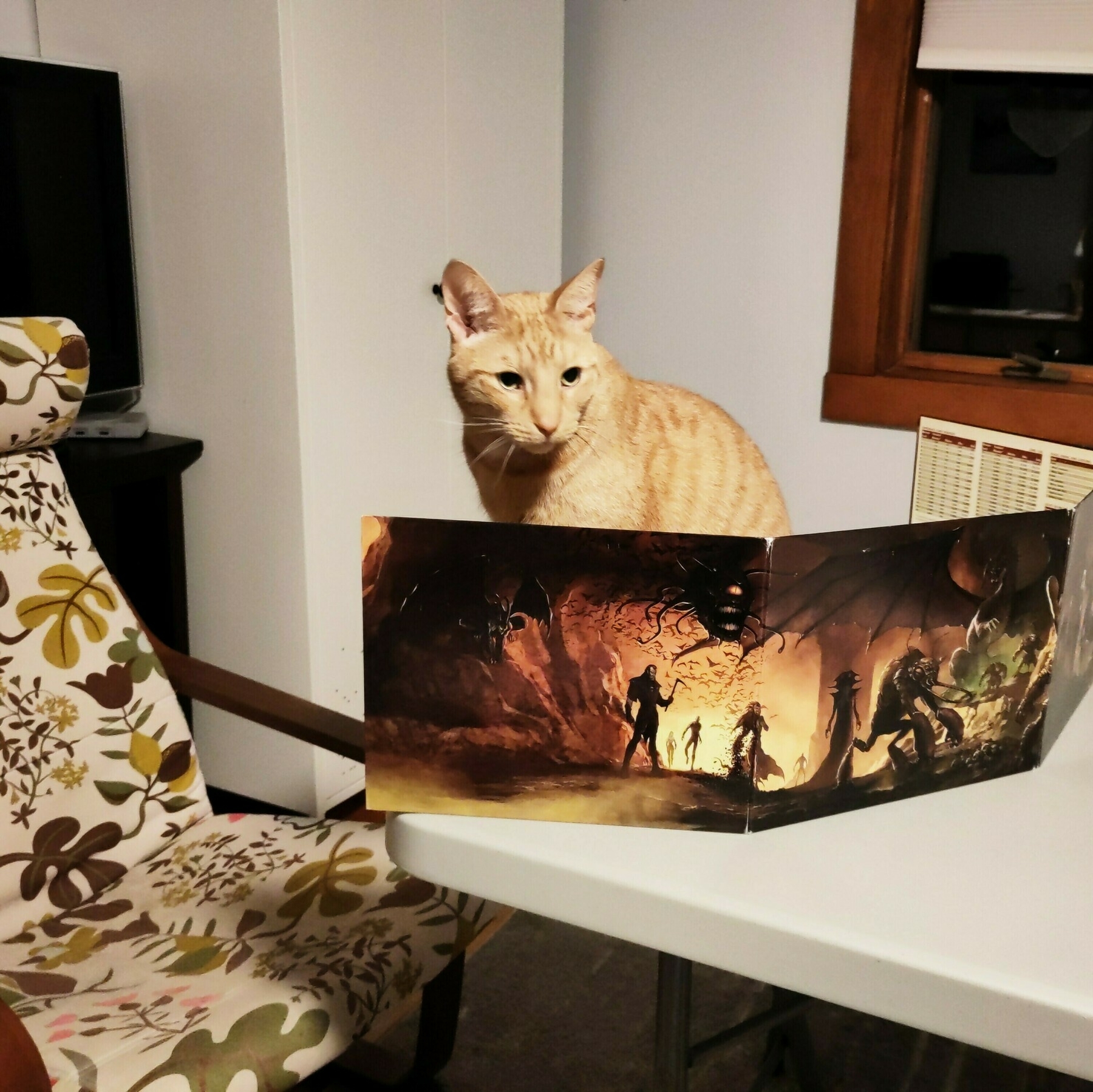
I geeked out all last week trying to figure out what systems were out there and what sounded fun and easy to prep and teach. I thought of Index Card RPG which us a rules-light system that I explored when I was tinkering with a solo hex-flower dungeon. They have a hex-crawl world that looked interesting and bonus! You don’t need to prep characters beforehand. You discover them as you play. Sold! It’s called Hard Suit. Absolute blast. Now I’m going to show pictures of some of the prep I did, which will contain spoilers to the discovery nature of the play. If you think you might play this system as a player I suggest you enjoy the cute picture of my cat Fuzzyboots being a Game Master and then stop reading.
Prepping the game
I love the discovery aspect of character creation. You play as characters that have been in suspended animation and upon awakening they have no memories of what is going on. One part of discovering themselves is catching a reflection in a mirror, glancing at their hands, and recovering a small fragment of a memory. There are helpful tables in the PDF to roll… but I didn’t want the rolling to slow down the game. So I wrote all the pieces of information out on little index cards and grabbed a cute pouch so they could draw one at random when the time was right. This was a big hit.
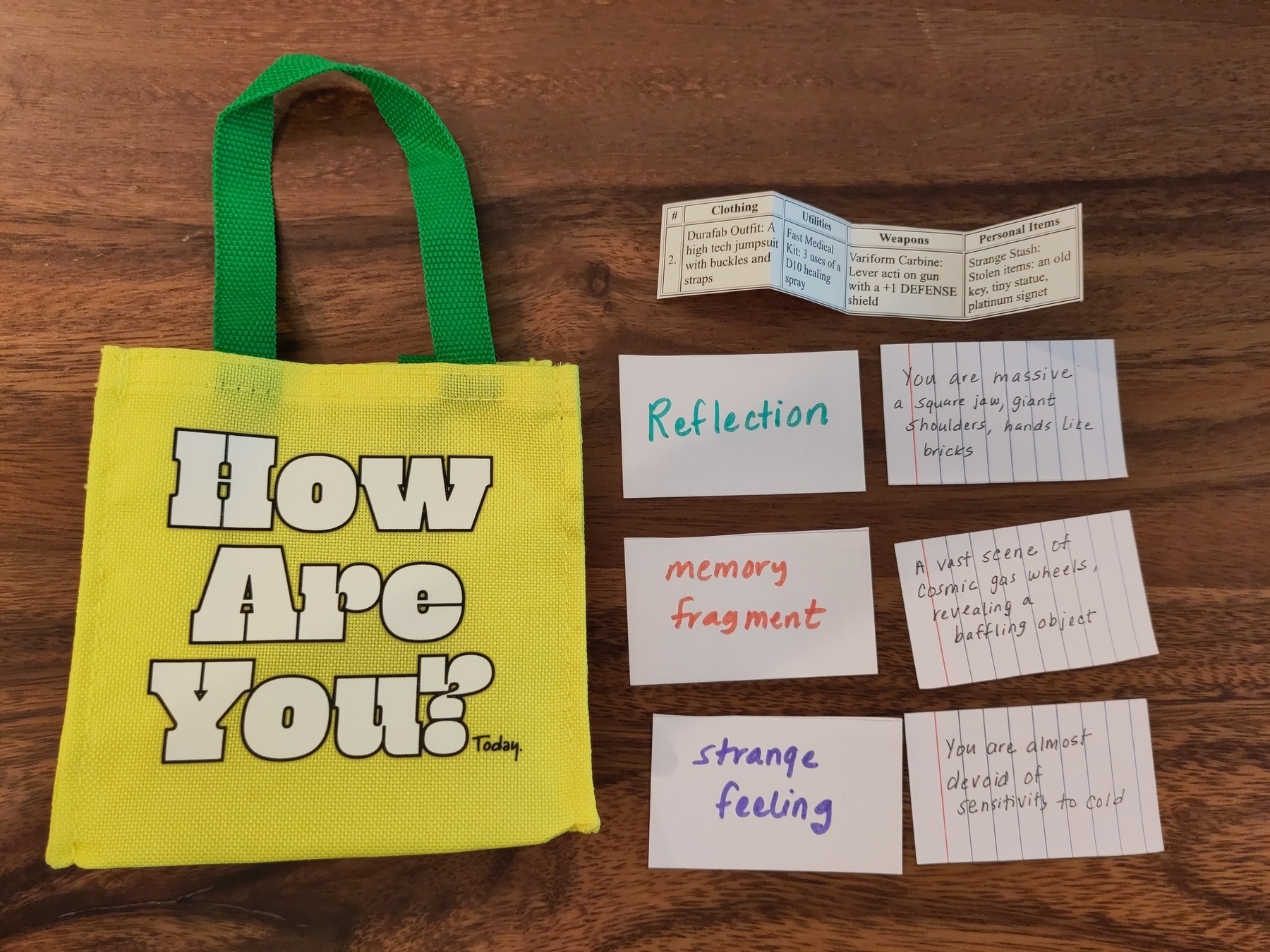
You might have noticed the “fortune cookie” looking paper. The players discover lockers with their name on them and inside they have four items. Things like clothing, weapons, utilities and something personal. Four things to roll on the random table and six players? No thank you. As I said I wanted easy and fast. So I whipped up a random “personal locker” generator and cut out the results. It was so much faster during play time. Plus a couple of the players liked that they could be secretive about what they found instead of me announcing everything. It made for some interesting role-playing.
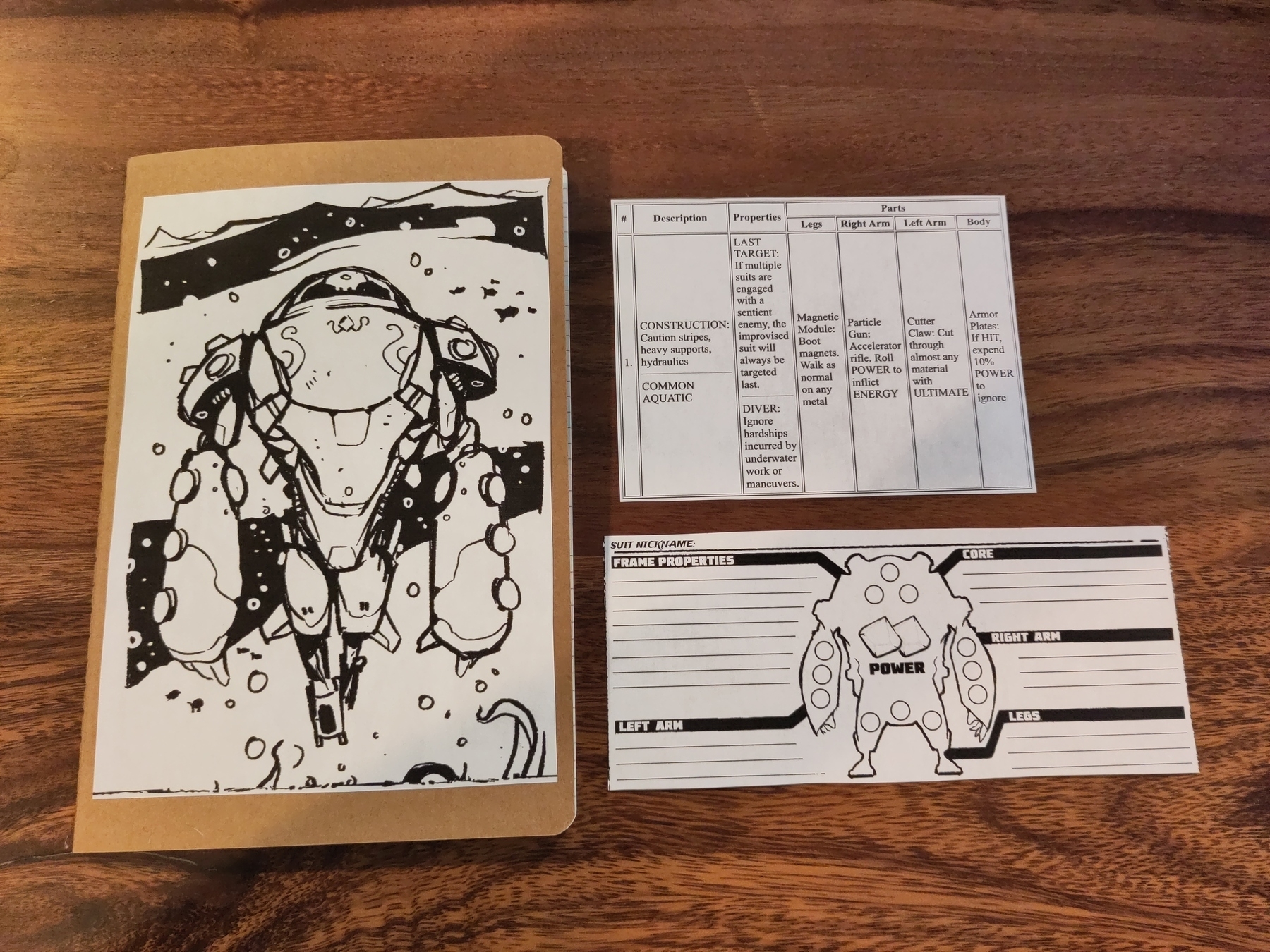
Next they discovered these strange hard suits. And… there is a lot to roll to generate them. Which needed to be done beforehand so I could describe them when they were discovered. Guess what? I made a generator 🤣
Here you go: A personal locker and hard suit generator of Hard Suit ICRPG
I also created a little book, by pasting an image from the pdf on a dollar store kraft notebook, so they could keep track of any suits they managed to find (and keep 😉). The bottom slip of paper is an included character sheet for the hard suits, I just resized it.
Tracking Things
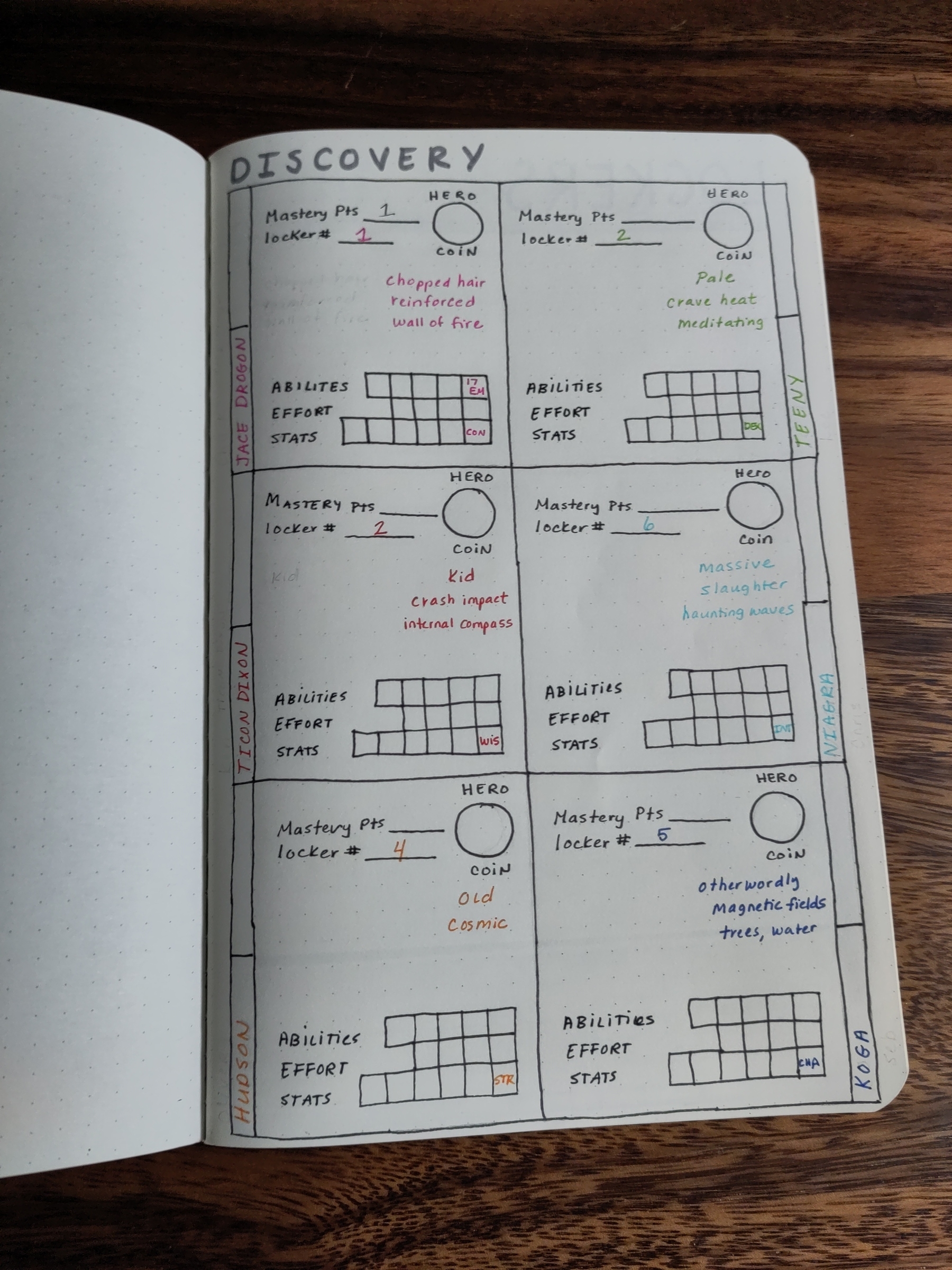
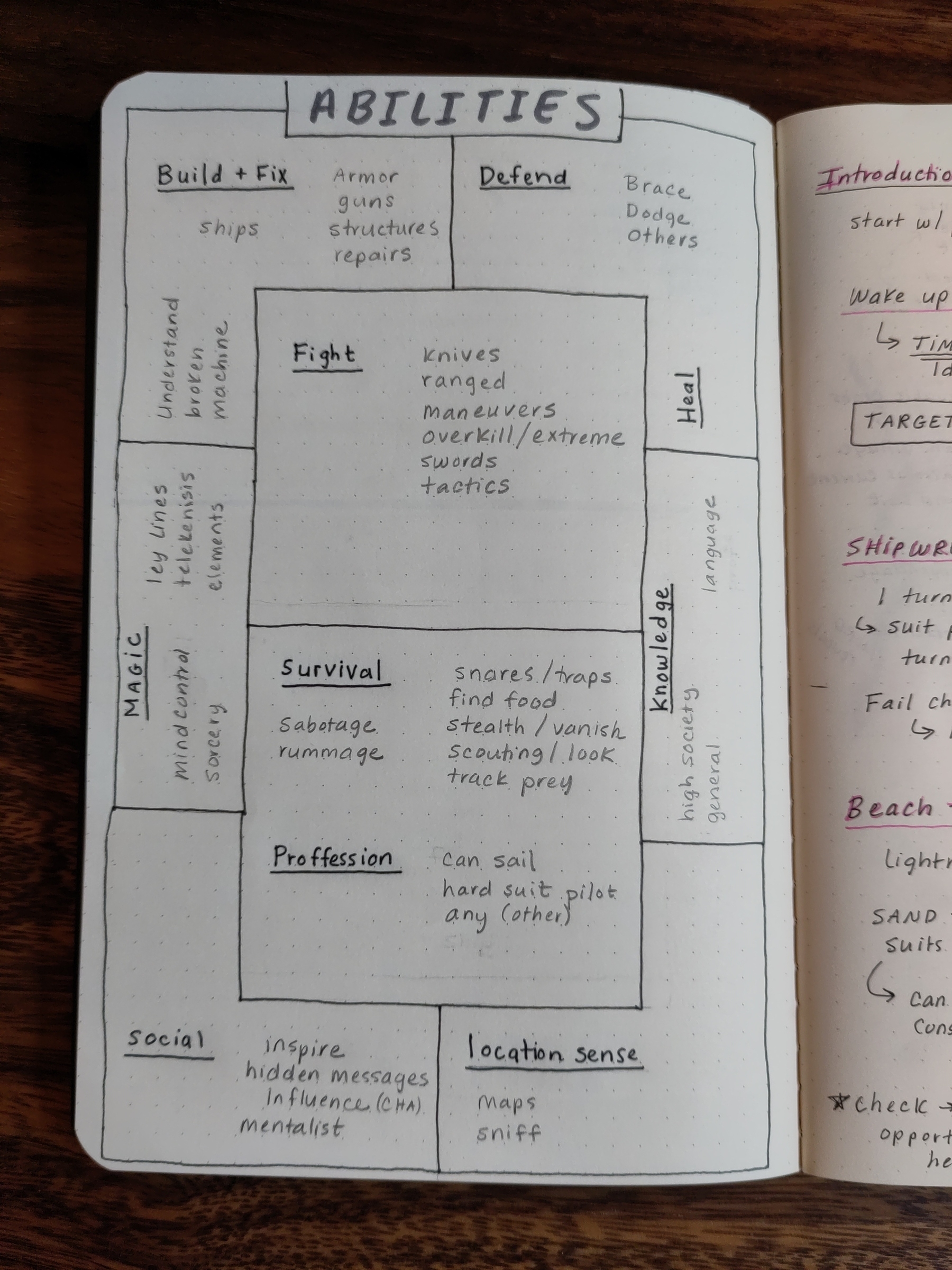
Another interesting part of discovery play is that you don’t roll character stats or look through the book for abilities and classes. Those things are all granted by me, as the GM, as play happens. But there is no easy way in the PDF to track them. [dramatic voice]…Oh no… I’ll need to make something in my GM notebook [end dramatic voice].
There is also a large table in the PDF for abilities that the characters can discover they have. They’re listed in alphabetical order, with fun names, which makes sense but I thought it might make it hard during play to note who was role-playing something I could assign an ability to. So I grouped them by “category”, simplified the names and put it into my GM notebook.
Battlemaps versus Art Cards
Battlemaps? No thank you. Maybe I’m just a bit exhausted but the idea of finding the perfect tiles or sketching out several large dry erase maps for the game. It just seemed like too much work.
I really love the art cards that were created for Index Card RPG. So I downloaded the bundle of all four sets, printed them out to approximately playing card size and got paper cutting. Then I tossed them into some clear sleeves to make them a bit more durable. It was fun and the cats loved making a mess of the paper clippings 😻
This is the first scene my players find themselves.
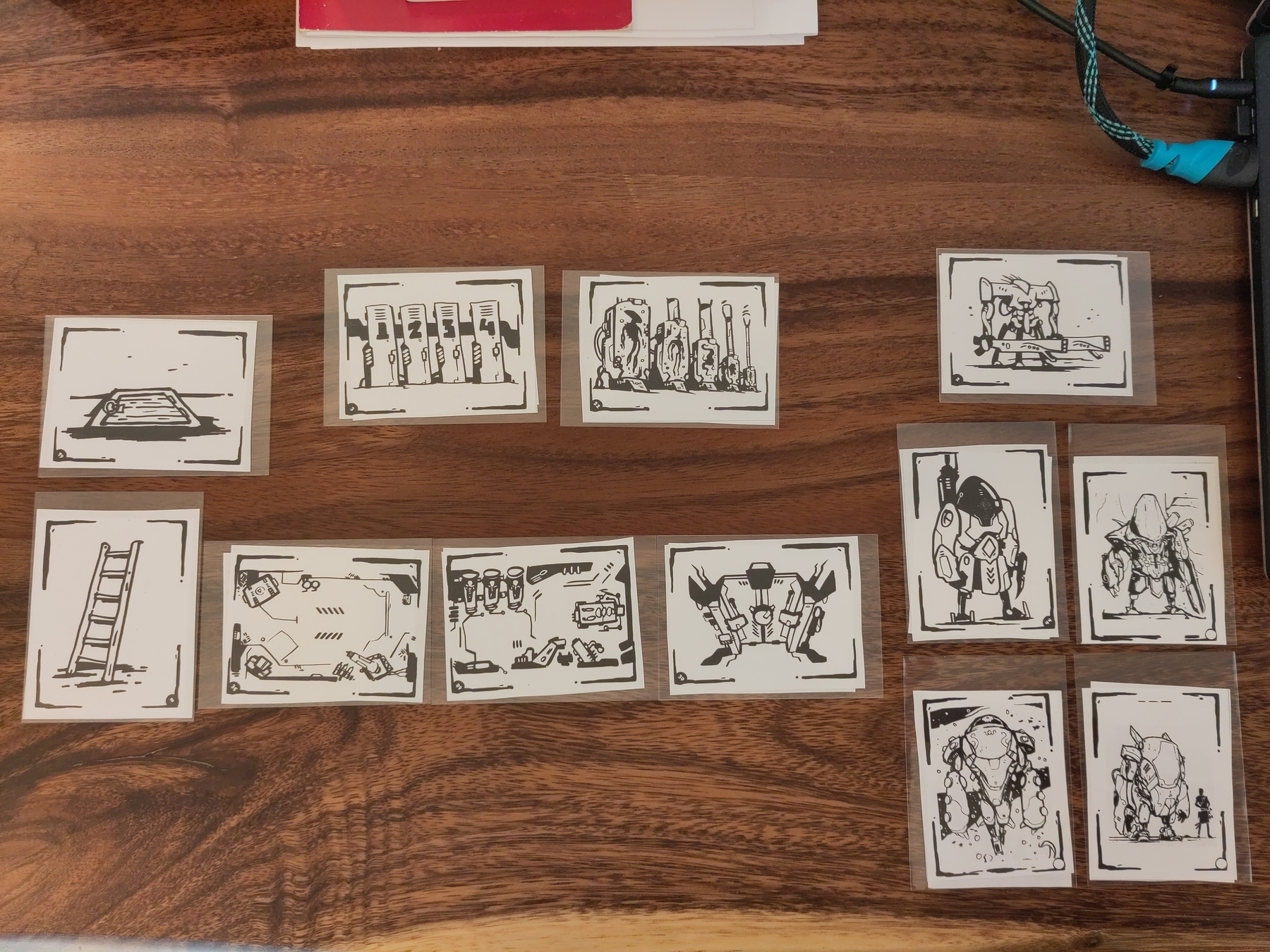
For movement, I think I’m going to take inspiration from this reddit thread: A complete guide for zone based index cards.
End Notes
And that’s it for prep. Instead of character sheets, I’m giving out dollar store notebooks. Instead of prepping every detail in the scenario I’m going to let an oracle decide most things. I want a more collaborative role-playing experience this time around :)
P.S. The first session was an absolute blast 🥰
 Loura
Loura